
Wed 11 Nov 2026 - Sat 6 Feb 2027
Private Monument Enclosures (2026)
Artist
Gallery
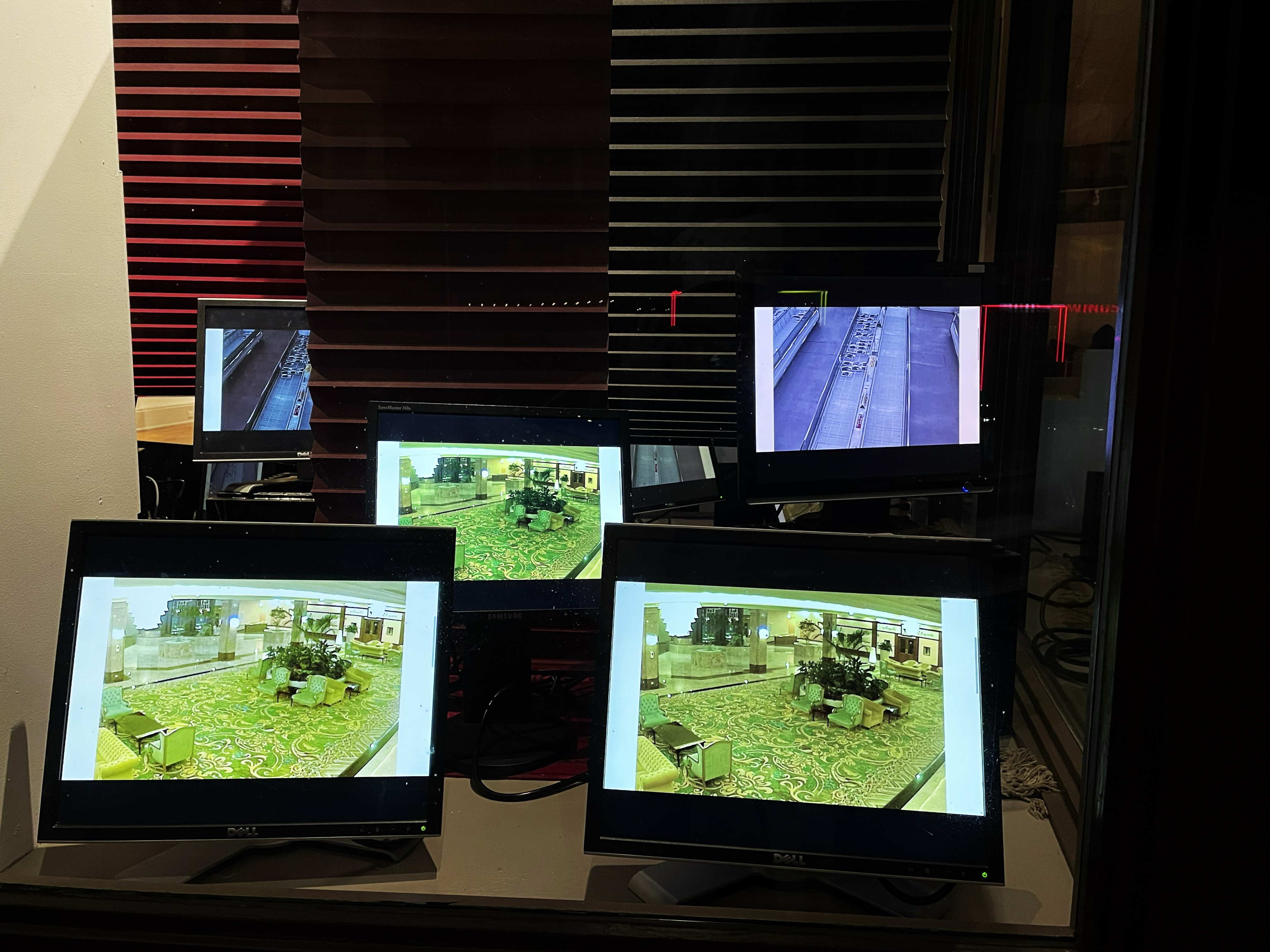
It's surprisingly and disturbingly easy to log onto CCTV security cameras connected to the internet, and due to increases in surveillance infrastructure, the cameras are plentiful. These little machines aren’t just outside measuring traffic and nature trails, but sit with us in our most quotidian spaces. In Private Monument Enclosures, each computer runs a live feed from a different interior location: a grocery store in Japan, a hotel lobby in Russia, a casino bar in Philadelphia, a church in Ireland.
Private Monument Enclosures (2026)
Christina Dovolis
“[Architecture and film] geometry is the connection between public sites and private spaces: doors that create a passage between interior and exterior, windows that open this passage for exploration. As moving views, the spatial perimeters of film and architecture always stretch by way of incorporation…. Fantasies of habit, habitat, and habitation, they map the narrativization of liminal space.” - Giuliana Bruno
"I was sitting at home, peeking through the blinds at my neighbor's wife, minding my own business, when my doorbell rang.” - Steve Martin
It's surprisingly and disturbingly easy to log onto CCTV security cameras connected to the internet, and due to increases in surveillance infrastructure, the cameras are plentiful. These little machines aren’t just outside measuring traffic and nature trails, but sit with us in our most quotidian spaces.
In Private Monument Enclosures, each computer runs a live feed from a different interior location: a grocery store in Japan, a hotel lobby in Russia, a casino bar in Philadelphia, a church in Ireland. You’ll see people carefully check the expiration dates on packaged fish and sit quietly in the glow of the slot machine, pull after pull. Delicate actions, movements without thinking. These “scenes” may change as cameras go from online to offline or lose connection, but new scenes will appear from other locations.
The computer monitors sit on a cozy red carpet, beneath a series of spray-painted red blinds suspended throughout the gallery. They rest comfortably, their wires exposed, making no attempt to hide their tangled guts in the familiarity of home. I imagine the people on the screens feel similarly at ease, unaware of our gaze as they inhabit their own (no longer) private spaces. The blinds partially obscure the screens, forcing us to shift, peek, and move around the installation to take in the live-streams.
I used to spend a lot of time watching surveillance footage. It often felt intrusive, and in many ways it was. Who put up these cameras? How many people are aware that their daily routines are so readily available to prying eyes, thousands of miles away? And why did I become one of these prying eyes–why after all, couldn't I just look away? Despite knowing intimately the insidiousness of surveillance infrastructure, still I kept peeking. Steeped in the ethical quandary of looking, I found instead that these real-time videos offered a strange sense of companionship, especially in domestic spaces. Something might happen at any moment and I needed to be there. Is this what it's like to be a God? We often imagine God as a comforting presence, always watching, keeping an eye on things. But maybe God watches for comfort too. There’s something meditative in watching someone go about their mundane tasks, making sure they don’t slip or drop their groceries, that they get to work on time, sharing their company–even if one party remains unaware. It might not be a sharing of space, but it’s a sharing of time, and I think it feels good to share time with people, even if they are on CCTV livestream hundreds of miles away.
And if you’re looking at this piece, that means you’re also looking through the window of the NAC, where people and community are gathering right before you. So come inside and contemplate the small, interior things together.
Christina Dovolis
Christina Dovolis is an interdisciplinary filmmaker and geographer, often working with cutting-edge technologies to explore how our built environments shape community and identity. Hailing from the Midwest, Christina draws inspiration from themes of the region: girlhood and gossip, kitschy deluxe, religious mythologies, and the complexities of urban/rural land development. As an educator and community organizer, Christina is committed to making new media programs more accessible to the public, particularly focusing on empowering women and emerging artists. She has achieved acclaim for her projects, with presentations at Museum of the Moving Image, SXSW Sydney, Aga Khan Museum, Kasseler Dokfest, Fantasia, and more. Christina holds a MA in Urban Planning from the National University of Singapore and a MFA in Film Production from York University, where she continues to work as an artist and researcher.